

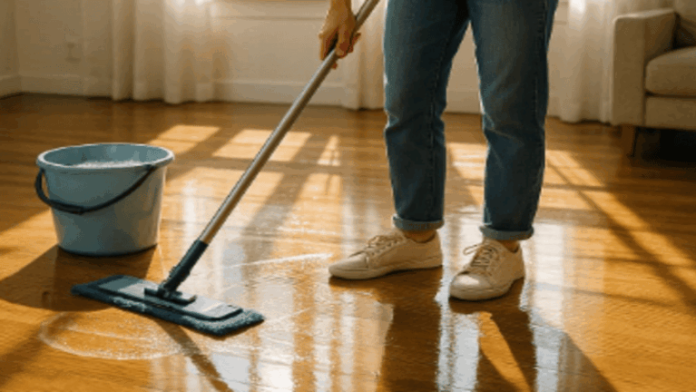
So, you’ve cleaned the floor, but it’s still sticky. This can be quite annoying, especially after all that effort, but there’s a reason why this is happening–using too many products and not rinsing after mopping.
Here’s how to keep your floors from becoming sticky again, and also some effective tricks to do so in less time and with less effort.
Choose the Right Cleaning Solution
First things first–if you don’t want sticky floors, then picking the appropriate cleaner is a must.
That’s because when you use the wrong solution for your type of flooring, you not only face this problem, but you also risk damaging it.
For example, for hardwood floors, you should get a cleaner specifically made for wood. Anything else might leave too much moisture and harm the wood over time.
If you’ve got tile floors, you know they’re tougher and can handle stronger cleaners, especially when cleaning grout, but be sure to pick carefully so it doesn’t leave stickiness.
Dealing with laminate floors is a bit tricky. Harsh cleaners can make them dull and sticky, so always check the labels to make sure it’s right for your floor type.
Overall, that’s why choosing the right cleaner is so important if you don’t want to deal with sticky buildup and keep your floors looking great.
Water Temperature Plays a Part, Too
Naturally, different temperatures have different effects, as you might expect. Hot water’s great for removing stubborn dirt and grime from hard surfaces like tiles or stone. It also helps break down oils and stuck-on grime in tiny cracks.
However, be careful with softer flooring like vinyl or some laminates. Too much heat can ruin them, so stick with warm or lukewarm water for those.
Matching the water temperature to your floor type is important because it makes cleaning easier and prevents sticky spots from appearing.
Mop Your Floors With The Correct Technique
Getting a spotless floor isn’t just about the cleaner you use–it’s all about how you handle that mop. Using the right mop technique can help avoid those sticky spots left behind.
How to Mop Your Floors Correctly
Ever heard of the figure-eight technique? It helps spread water and cleaner evenly. Just imagine drawing an eight on the floor with the mop, moving smoothly instead of just back and forth. This prevents water from pooling on the edges or in the middle, so you don’t get sticky spots.
Also, make sure to wring out the mop well. If it’s too wet, you could end up with a floor that dries all weird and sticky. You want the mop damp, not soaked, for a neat finish.
Perfecting the figure-eight and keeping the mop just damp enough will really make a difference.
Mopping regularly also keeps floors looking good, but how often should you do it to avoid sticky messes? Well, that really just depends on how much traffic the area gets and what kind of floor you have.
High Traffic Areas
Places like kitchens and hallways get a lot of action, so they need more love. Mopping once a week should do the trick. This way, dirt doesn’t pile up, and you won’t end up with sticky floors from using too much cleaner.
Low Traffic Areas
Rooms like bedrooms and guest rooms don’t see as much action. Mopping every two weeks works fine here. It keeps things tidy but avoids that sticky floor problem from over-doing it.
Tips to Prevent Sticky Floors
To prevent floor stickiness, try sweeping or vacuuming more often than mopping, as this clears out dirt and dust early on. Adjusting how you mop for each room not only makes floors look great but also reduces cleaner use, saving you time and effort.
Rinse Surfaces After Mopping
After you mop the floor, rinsing it might feel like one more thing to do, but it’s rather helpful when you want to avoid sticky flooring.
A quick splash of clean water is enough to wash away any leftover cleaner and keep things smooth afterwards, especially if you’ve got hardwood floors or other delicate surfaces. Just use a slightly wet mop or a little water in a bucket to stop cleaners from sticking and pulling in dirt.
By rinsing regularly, you can say goodbye to annoying sticky spots and keep your floors looking fantastic at all times.
The Importance of Regular Sweeping and Spill Management
Dust and crumbs pile up fast, so a quick sweep every few days stops the mess from building up. It also makes mopping way easier and reduces the frequency you need to do it.
If you’ve got a spill, then you have to clean it up right away so it doesn’t turn into a sticky, hard-to-clean mess. For example, if you spill juice, wipe it up fast to keep the floor from becoming sticky.
Another thing you could do is put doormats at your doors. They help catch dirt from outside before it gets in. It’s also useful to ask everyone to wipe their feet well when they come in, or introduce a no-shoe policy if you want a much cleaner house.
These easy and effective habits can cut down on how much you need to mop, saving you time and effort you could put into more important things, like family or catching up with your favourite TV show on Saturday afternoon.
Conclusion
Sticky floors are really annoying, but if you follow these tips, you won’t ever have to worry about them. Remember, regular routine and correct technique are all that is required for you to eliminate stickiness and protect your flooring for the long haul.
If the problem persists, however, you might want to call a qualified domestic cleaner to handle the issue while you kick back and relax.
Good luck and stay clean!


